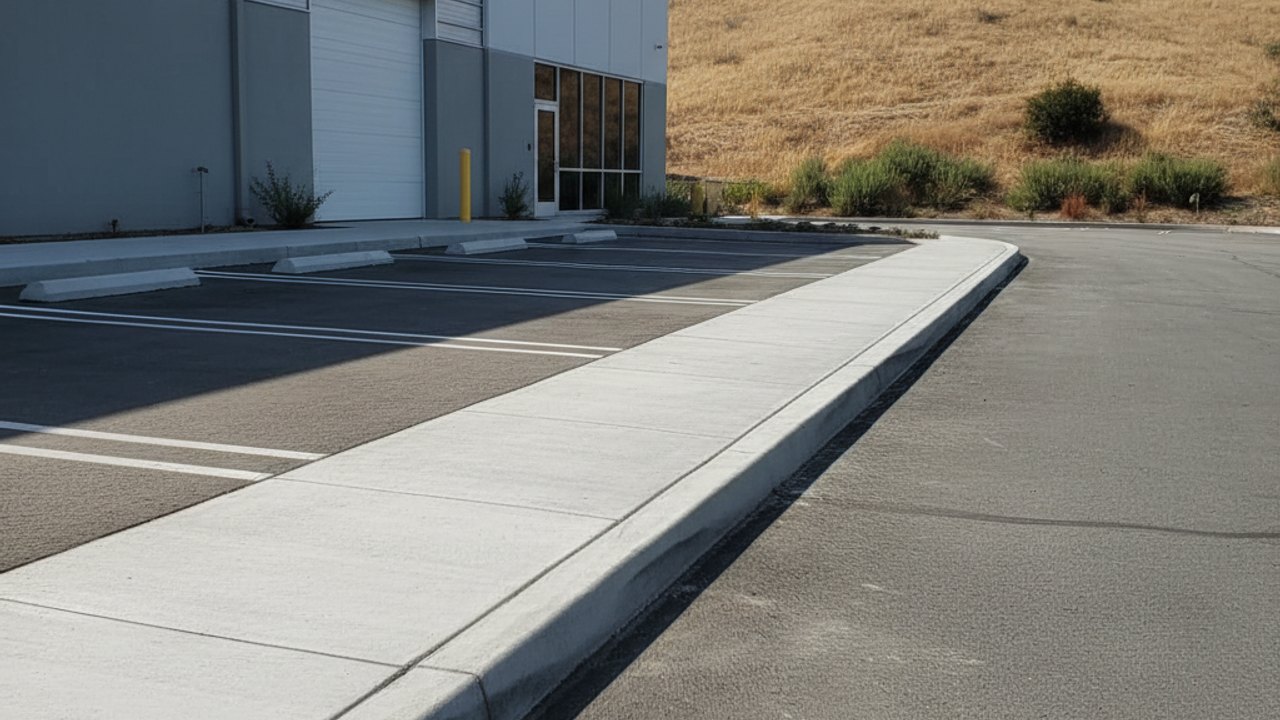
Concrete looks simple from the sidewalk. A truck shows up, a crew screeds a slab, a few days later you're driving on it. What you can't see is the part that decides whether that slab is still flat and crack-free in fifteen years, or heaving at one corner by year four. Choosing a contractor here comes down to whether they deal with that hidden part correctly, and whether they'll tell you the truth about it before they take your deposit.
Start with the license, not the price
Any contractor pouring concrete in California for a job over $500 needs a C-8 concrete license or a general B license through the CSLB, and you can look up that number in about thirty seconds on the state's website. Check that it's active, check the bond, check for complaints. A surprising number of driveway and patio jobs in San Mateo County get bid by unlicensed crews working out of a truck, usually the cheapest bid you'll get, and usually the one with no recourse if the slab settles or the color comes out blotchy. If a bid comes in far below everyone else's, ask why. Sometimes it's a smaller crew with lower overhead. Sometimes it's because they're skipping the base prep nobody sees until the slab cracks.
Insurance matters more than people think
Ask for a certificate of general liability and, if there's a crew of more than one person, workers' comp. If a worker gets hurt on your property and there's no coverage, that liability can land on you as the homeowner. A legitimate contractor hands this over without hesitation because they deal with the question every week.
Ask what they're doing about the soil
San Mateo doesn't have one kind of ground. Down near the bay flats, around the old salt marsh areas east of El Camino, you're often dealing with soft bay mud and a high water table, soil that compresses and settles under load. Up in the hills, around the San Mateo Highlands and parts of Sugarloaf, there's expansive clay that swells when it's wet from winter rain and shrinks hard when it dries out over our long dry summer. Both conditions do the same bad thing to a slab if the base isn't handled right: they let it move unevenly, and an unevenly supported slab cracks wherever it wants, not along the joint you cut.
A contractor who knows the area will talk about base rock compaction before they talk about finish. For a driveway or patio, that usually means excavating out the soft or organic material, laying down 4 to 6 inches of compacted aggregate base, and getting a proper moisture-density test or at least a visibly tight, non-yielding surface before any forms go down. If someone's ready to pour straight onto native soil to save a day, that's the corner that shows up as a crack two winters later.
Rebar, mesh, and joint spacing aren't optional details
Ask specifically what reinforcement they're using. Wire mesh is cheaper and it's fine for some light-duty slabs, but it tends to sag to the bottom of the pour if it isn't held up on chairs, which defeats the purpose. For driveways carrying vehicle weight, or on any ground with clay movement, half-inch rebar on a grid, tied and lifted off the base, gives you something that actually holds the slab together if it does crack. Ask where the control joints go. A rule of thumb is joint spacing at roughly 2 to 3 times the slab thickness in feet, so a 4-inch driveway slab wants joints every 10 to 12 feet or so. Those joints should get cut within 24 hours of the pour, while the concrete is green enough to saw but has set enough to hold a clean line. Cut it too late and the slab has already decided where to crack, usually somewhere uglier than the joint.
Understand the timeline, because rushing it is where jobs go wrong
Concrete doesn't cure the day it looks solid. It sets enough to walk on within 24 to 48 hours, it's usually fine to drive a car on after about 5 to 7 days, and it doesn't reach full design strength until around 28 days. A contractor who tells you the driveway's ready for the moving truck on day two either doesn't know better or doesn't care. Weather affects this. Our rainy season runs roughly November through March, and a pour that gets rained on before it's had a chance to set can wash out the surface finish or weaken the top layer. Good crews watch the forecast and won't pour into a storm. Our dry season, especially in the warmer stretch from June through September, means faster surface drying and a higher risk of plastic shrinkage cracking if the crew doesn't keep it damp with proper curing compound or wet curing in the first few days. Either extreme calls for a different approach, and a contractor who's worked here long enough should mention it without being asked.
Permits, setbacks, and the paperwork side
The City of San Mateo Building Division handles permits for most residential concrete work inside city limits, and unincorporated pockets go through the County. Foundation work and retaining walls over a certain height almost always need a permit and an inspection of the excavation and rebar before the pour, because once it's covered, nobody can verify it. Driveway aprons and sidewalks that touch the public right-of-way usually need a separate encroachment permit through Public Works, since that strip of concrete technically belongs to the city even though you maintain it. A contractor who shrugs off permits to save you time is saving themselves paperwork, not you money, because unpermitted work can become your problem at resale. If you're in an HOA, which is common in some of the newer developments near Bay Meadows and Bridgepointe but rare in the older single-family streets around Baywood and Hayward Park, check whether the association has its own approval process before anyone breaks ground.
Older streets versus newer subdivisions
A lot of San Mateo's housing stock went up in the 1940s through the 1960s, and slabs and foundations from that era were built to a different standard than code requires now. On those older lots you'll often find old clay sewer laterals, buried debris, or a shallow, undersized foundation that a contractor needs to work around or tie into carefully. Newer construction closer to Bay Meadows tends to have more predictable soil prep already done and fewer surprises underground, but even there, utility locates before digging are not optional. A contractor should be pulling an 811 locate before any excavation, full stop, on every job regardless of the neighborhood's age.
What a walk-away bid looks like
- No mention of base prep or soil conditions in the estimate, just a price per square foot.
- Cash only, no written contract, no license number offered.
- Vague on rebar versus mesh, or can't say what joint spacing they'll use.
- Pushing you to skip the permit to save time.
- Promising a driveway ready for full traffic in a day or two.
A good bid reads almost boring, because it spells out the excavation depth, the base material, the reinforcement, the joint layout, and a realistic cure schedule. Get two or three of those, compare them line by line, and the right contractor usually becomes obvious. If you want a set of eyes on your particular lot before you get quotes from around town, Paramount Concrete handles driveways, patios, foundations, and repair work across San Mateo and the surrounding towns, and we're happy to walk the site with you.